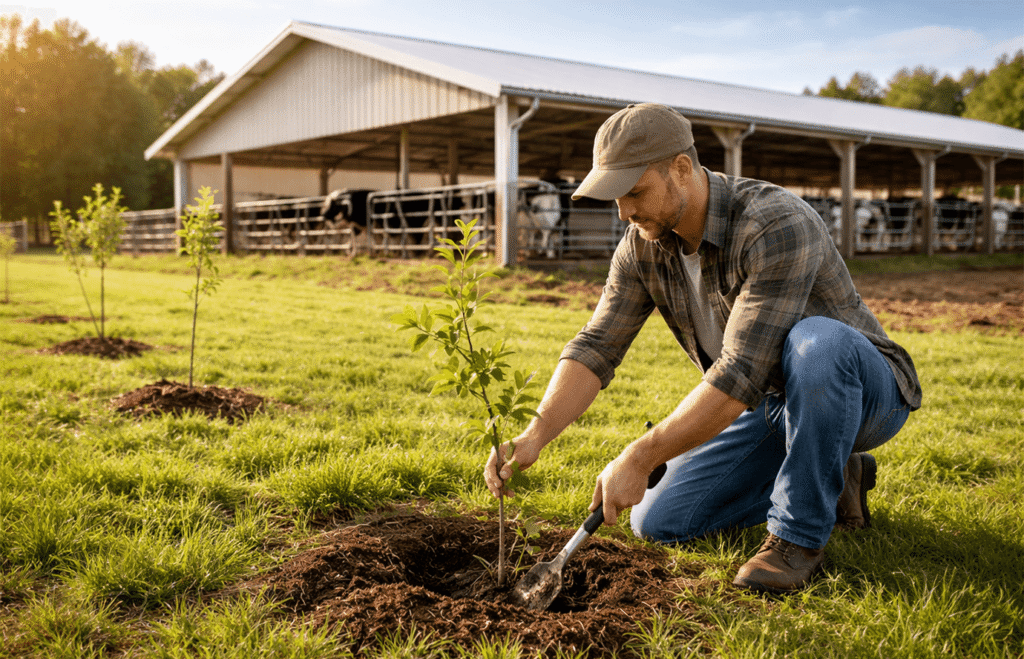
Every April, we celebrate Earth Day by implementing small changes, such as planting a tree, picking up litter, or swapping traditional light bulbs for LED ones.
But what about larger, more effective changes? Practices that really make a difference beyond one day? Dairy farmers incorporate the tenants of Earth Day into their everyday practices and are some of the most dedicated environmental stewards around.
Here’s a look at the sustainable practices dairy farmers use every day, practices that would make even the most devoted Earth Day enthusiast proud.
Nutrients Back into the Soil
Healthy land grows healthy food for dairy cows. All dairy farms use manure management systems that capture and repurpose what cows naturally produce and return valuable nutrients back to the soil. Think of it as nature’s own recycling program. The result? Healthier fields, fewer synthetic fertilizers, and a cleaner planet along with a better food source for cows.
Reducing Water Waste
Water is a precious resource, and dairy farmers treat it that way. From precision irrigation systems that deliver just the right amount of water to cover crops that hold moisture in the soil, farmers are finding smarter, more efficient ways to use every drop. Many farms also recycle water used in milking parlors for field irrigation. It’s the kind of conservation effort that fits right in with Earth Day’s message: use what you have wisely, and don’t take it for granted.
Methane Capture and Energy
Here’s one that might surprise you. Some dairy farms are now using anaerobic digesters, systems that capture methane gas produced by manure and converting it into usable electricity or fuel. That’s right: what was once considered a waste product is now powering homes and farm equipment. It’s innovative, it’s practical, and it’s exactly the kind of forward-thinking that puts farmers at the forefront of sustainability.
Protecting Local Waterways
The streams, rivers, and wetlands near a farm are part of the community, too, for wildlife and people alike. That’s why dairy farmers plant buffer strips of grass and trees along waterways to prevent runoff, filter pollutants, and create habitat for birds and other animals. Farmers also make smart choices on when to spread manure on their fields to prevent runoff and maximize nutrient absorption. These waterway practices are rooted in care: for the land, for the neighbors downstream, and for the ecosystems that depend on clean water every single day.
Healthier Herds for a Healthier Planet
Better animal nutrition and veterinarian care means cows produce more milk using fewer resources. Through advances in feeding practices, animal care, and herd management, today’s dairy farmers are producing more with less — which is exactly what sustainability is all about. A healthier herd isn’t just good for the farm; it’s good for the environment.
This Earth Day, pour a cold glass of milk and take a moment to think about the farmers behind it. They’re not just feeding your family; they’re caring for the land that feeds all of us. And that’s a tradition worth celebrating, today and every day.